
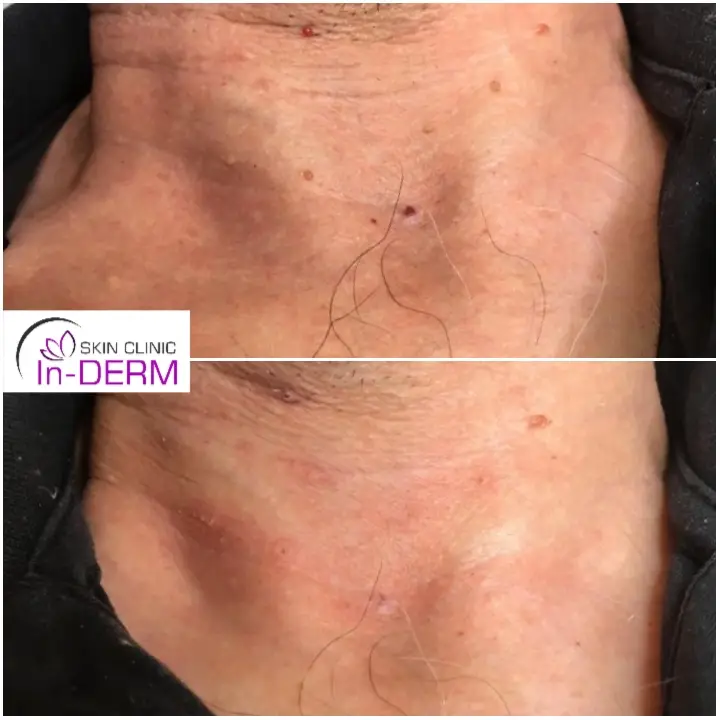
If you’re planning skin tag removal results in Chelsea, it’s natural to ask, “What will my skin look like after?” Immediately after skin tag removal, the skin can appear pink, slightly raised, or lightly scabbed depending on the method used. Most clients at In-DERM Skin Clinic find the area settles quickly with simple aftercare. In this guide, we’ll show you what “normal” looks like, what to watch for, and how to help your skin heal neatly after skin tag removal.
Immediate Appearance After Treatment (By Method)
Cryotherapy (Freezing)
Right after freezing, the skin at the spot often looks slightly white or pale from the cold exposure, then returns to pink or light redness within minutes. Over 24–72 hours, the treated tag can darken (brown/black) and a small crust may form. This is expected and part of the body’s process to shed the tag.
Electrocautery / Hyfrecation (Heat)
You’ll likely see a pinpoint char or tiny, coffee-ground-like scab. The surrounding skin may be mildly red and warm for a few hours. This scab typically lifts within 5–10 days if left undisturbed.
Snip Excision (Sterile Scissors or Blade)
Immediately post-snip, there may be a pinpoint of bleeding that stops quickly, followed by a small, flat scab. The site often looks tidy and slightly pink. With good aftercare, it dries and sheds predictably.
Ligation (Tying Off)
The tag darkens and dries over several days. The base can appear slightly indented as blood flow is cut off. The tag shrivels and detaches in time; surrounding skin is usually only mildly pink.
In all cases, our aim at In-DERM is a clean, precise finish. A tiny, well-formed scab or superficial crust is normal after skin tag removal.
Day-by-Day Healing Timeline
Days 0–1: Calm and Protected
- Look: Pinkness or mild redness; a tiny scab or superficial crust.
- Feel: Slight tenderness or warmth that settles within hours.
- Care: Cleanse gently with a fragrance-free cleanser, pat dry, and apply a thin occlusive (e.g., petrolatum) as directed. Avoid make-up on the spot for 24–48 hours.
- Tip: A wrapped cool pack for 5–10 minutes can soothe residual sting on the day of treatment.
Days 2–4: Settle and Seal
- Look: The scab or crust becomes a little darker as it dehydrates; surrounding skin should look calm.
- Care: Continue gentle cleansing and a thin occlusive 1–2× daily. Keep the area dry after showers; do not pick.
- Activity: Avoid heavy sweat sessions, hot yoga, saunas, or friction from tight collars/straps.
Days 5–7: Lift and Reveal
- Look: The scab often begins to lift at the edges and may fall off on its own. Underneath, you may see a fresh pink spot.
- Care: Introduce broad-spectrum SPF (mineral preferred) once the skin surface is closed (usually after 24–48 hours). SPF is crucial to minimise post-inflammatory pigment changes.
Days 8–14: Fade and Blend
- Look: Pinkness gradually fades to your natural tone. On some skin tones, a faintly darker or lighter patch may persist temporarily.
- Care: Keep up daily sunscreen and a gentle moisturiser. Most clients have returned fully to normal routines by now.
Many clients find the healing journey after skin tag removal smoother than expected—especially with consistent sunscreen and a strict “hands-off” approach.
Normal vs Not-Normal: What to Expect vs When to Call
Normal signs
- Mild pinkness or redness that improves daily
- A tiny, well-bounded scab or crust
- Light itching as the area heals
- A pink spot after the scab lifts (fades over weeks)
Not-normal signs (contact the clinic)
- Spreading redness or heat after 48 hours
- Increasing pain or throbbing (not just tenderness)
- Pus, unusual discharge, or significant swelling
- Bleeding that restarts or doesn’t stop with gentle pressure
- A lesion that changes shape/colour rapidly or behaves unlike a typical tag
When in doubt, send us a photo. Our team at In-DERM in Chelsea will review and advise, ensuring the best outcome after skin tag removal.
Colour Changes and Scarring Risk (By Skin Tone)
Lighter Skin Tones (Fitzpatrick I–III)
You may notice a temporary pink spot that gradually blends in. Hyperpigmentation is less common but can occur if you pick or skip SPF.
Darker Skin Tones (Fitzpatrick IV–VI)
You’re more prone to temporary darkening (post-inflammatory hyperpigmentation). Consistent sunscreen and zero picking are your best tools. If you’ve had keloids before, tell your practitioner; we’ll tailor the approach and aftercare.
Scarring Risk
With sterile technique, correct method choice, and good aftercare, visible scarring is uncommon. The biggest risks are picking scabs, sun exposure without protection, and friction. Protecting the skin during the first 2–3 weeks after skin tag removal is key.
Aftercare Essentials: What Helps Skin Look Its Best
- Cleanse gently: Fragrance-free, non-foaming cleanser; pat dry.
- Occlusive care: A thin layer of petrolatum or clinic-recommended ointment to keep the site supple.
- Hands off: No picking, rubbing, or scrubbing—let the scab detach on its own.
- Sun protection: Mineral SPF daily once the skin is closed; reapply if outdoors.
- Pause actives: Avoid retinoids, AHAs/BHAs, and benzoyl peroxide on the treated spot for 5–7 days or as advised.
- Clothing & friction: Avoid tight collars, bra straps, or jewellery rubbing the area during Week 1.
Make-up, Workouts, Clothing, and Return to Routine
- Make-up: For face/neck sites, wait 24–48 hours and only apply to closed skin. Use clean brushes/sponges and remove gently.
- Workouts: Light activity is fine. Delay intense sweat sessions, hot yoga, and saunas until the scab has lifted and the skin looks calm.
- Shaving: Avoid shaving directly over the spot until fully healed to prevent snagging and pigment changes.
- Clothing: Choose soft fabrics that won’t rub; switch to tag-free tops or adjust straps if the site is in a friction zone.
Following these steps keeps the post-treatment look tidy and helps the skin blend back to baseline promptly after skin tag removal.
Frequently Asked Questions
How long until the skin looks “normal” again?
Most clients feel “photo-ready” within 7–14 days. Pinkness can linger a bit longer, then fade. Sunscreen speeds an even return to tone.
Will there be a scar?
A visible scar is uncommon when you avoid picking, protect from sun, and follow aftercare. If you’re scar-prone, we’ll advise a gentler method and tailored care.
Can I treat multiple tags at once?
Yes, often several in one visit. Your practitioner will prioritise comfort, visibility, and friction points, and may stage treatments in very sensitive areas.
What if the spot looks darker after the scab falls off?
Temporary darkening (PIH) is more common in darker skin tones and after sun exposure. Daily mineral SPF and patience usually resolve it over weeks to months.
When should I worry about infection?
If redness spreads, pain increases after 48 hours, or you see pus or unusual swelling, contact In-DERM. Early guidance keeps healing on track after skin tag removal.
The Takeaway: What You’ll See and Why It’s OK
After skin tag removal, it’s normal to notice a small scab, followed by a fresh pink area that gradually blends with the surrounding skin. With gentle cleansing, a thin occlusive layer, and consistent use of sunscreen, most clients in Chelsea find the area looks calm and discreet within around two weeks. Supporting healthy post-treatment healing includes avoiding picking and protecting the area from sun exposure, which helps achieve the best possible cosmetic result.
Book Your Consultation
Ready for precise, professional skin tag removal in Chelsea and clear, supportive aftercare? Book your consultation at In-DERM Skin Clinic. We’ll assess your tags, choose the gentlest effective method, and guide you through healing step by step so your skin looks its best, fast.