
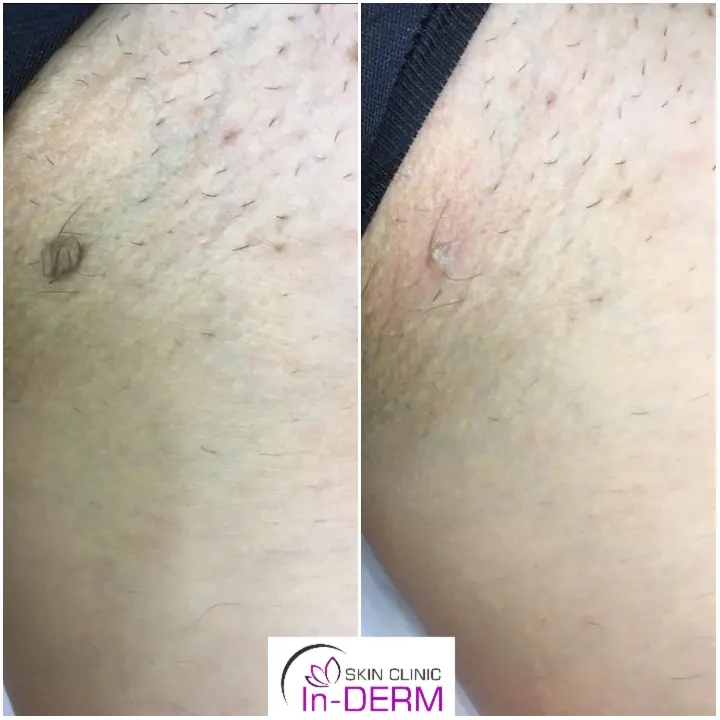
If you’re considering skin tag removal in West London, you’re probably asking the most common question: does it hurt? At In-DERM Skin Clinic in Chelsea, we use medical-grade techniques designed for precision and comfort. Most clients describe skin tag removal as a brief, manageable sensation rather than true pain often a quick sting, warm prickle, or momentary tightness, depending on the method and location. In this guide, you’ll learn exactly what skin tag removal feels like, how we keep you comfortable, and how to care for the area so healing is smooth and predictable.
What Are Skin Tags and Why Remove Them?
Skin tags (acrochordons) are small, soft, benign growths that commonly appear where skin rubs neck, underarms, under the breasts, groin, and eyelids. They’re harmless but can snag on jewellery, catch on clothing, or become irritated with shaving. Many clients choose professional skin tag removal for comfort, grooming ease, and a neater finish in visible areas.
What Does Skin Tag Removal Feel Like?
Cryotherapy (Freezing)
A controlled burst of cold targets the tag. Expect a sharp, chilly sting that fades quickly as the skin re-warms. Small tags often darken and detach within days. Contact time is brief, which many clients prefer.
Electrocautery/Hyfrecation (Heat)
A fine tip uses carefully dosed heat to dehydrate and cauterise the tissue. With topical anaesthetic, most clients feel warmth and a quick pin-prick. A tiny scab forms and usually lifts in about a week. This option is very precise for stalked tags.
Snip Excision (Sterile Scissors/Blade)
The tag is lifted and snipped at the base. With numbing, most clients feel pressure and a quick pinch at most. A pinpoint of bleeding may occur and is sealed immediately with cautery or a haemostatic agent.
Ligation (Tying Off)
A sterile loop ties the base to cut off the blood supply. Sensation is more like tightness than pain; the tag shrivels and detaches over days. It’s low-impact but slower.
Factors That Influence Sensation
Treatment area
Delicate zones (eyelids, neck folds, bikini/groin) are more sensitive than the forearms or torso. Movement and friction-prone spots may feel slightly sharper but remain manageable.
Tag size & attachment
Flat micro-tags respond well to freezing; thicker, stalked tags may suit snip + cautery. The sturdier the attachment, the more likely you’ll feel a brief pinch or heat.
Skin type & sensitivity
Reactive or very dry skin can feel more tender; well-hydrated skin often tolerates procedures better. We tailor settings and approach accordingly.
Hormonal & individual variability
Some clients feel more sensitive pre-menstruation or with conditions such as PCOS. Let your practitioner know timing and comfort steps can be adjusted.
Technology & technique
Modern devices and precise parameters reduce discomfort and support neat healing. In skilled hands, energy delivery is controlled and efficient.
How In-DERM Skin Clinic Minimises Discomfort
- Topical anaesthetic when indicated: Applied under occlusion for ~20–30 minutes to dull sharp sensations before skin tag removal.
- Method matched to the tag: We select freezing, cautery, snip, ligation or a combination based on size, stalk, and location.
- Cooling & contact-time control: Short, precise passes reduce cumulative sting or heat.
- Breathwork & pacing: We coordinate each pass with a slow exhale; micro-pauses further blunt sensation.
- Sterile technique & delicate handling: For comfort, safety, and a tidy cosmetic outcome.
- Clear walk-through: We explain what each step will feel like and can perform a brief “test touch” so there are no surprises.
Step-by-Step: Your Visit to In-DERM Skin Clinic
Before Your Appointment
- Pause actives: Avoid retinoids, AHAs/BHAs, and benzoyl peroxide on the area for 48 hours.
- Arrive with clean skin: No make-up, self-tan, or heavy creams on the treatment site.
- Share your history: Medications, allergies, tendency to keloid, pregnancy, or recent lesion changes. If anything looks atypical, we’ll advise medical review before skin tag removal.
During Your Appointment
- Assessment & plan: We confirm the lesion is a typical skin tag and discuss method options and expected sensation.
- Consent & comfort set-up: Topical anaesthetic if appropriate; settings are tailored to your skin and the tag’s characteristics.
- Treatment: Quick, controlled passes (freeze, cautery, snip, or a combination). Multiple tags can often be treated in one session.
- Finish: A thin occlusive is applied; we review aftercare and answer questions.
Right After Treatment (Day 0)
Mild redness or warmth is common and settles quickly. Keep the area clean and dry; follow the occlusive routine we provide.
Healing & Aftercare Timeline
Days 1–3
- Expect a tiny “coffee-ground” scab or superficial crust—don’t pick.
- Cleanse gently with a fragrance-free cleanser; pat dry.
- Reapply a thin occlusive 1–2× daily to keep the site supple.
- Avoid saunas, hot yoga, and heavy friction (collars, bra straps).
Days 4–7
- The scab typically lifts as the surface renews.
- Once the skin is closed (usually 24–48 hours), begin broad-spectrum SPF (mineral preferred) to reduce the risk of pigmentation.
Days 7–14
- A faint pink spot may remain and gradually fade. Continue daily SPF.
- Contact the clinic if you notice spreading redness, increasing pain after 48 hours, pus, or unusual swelling.
When Not to DIY and When to Seek Review
- Skip home tools and “string tricks”. They increase infection and scarring risk and can injure delicate structures (especially near the eyes).
- Not everything that looks like a tag is a tag. Irregular colour, rapid change, spontaneous bleeding, or crusting warrants medical evaluation before skin tag removal.
- Eyelids & intimate areas: Require advanced control; choose experienced professionals for assessment and treatment.
Frequently Asked Questions
Is there usually bleeding?
A pinpoint dot can occur with snip excision; freezing and cautery typically minimise bleeding. We use sterile technique and haemostatic measures for a tidy finish.
Will the same tag return?
The treated tag won’t grow back, but new tags can appear in friction-prone areas over time. Managing friction and discussing metabolic factors with your clinician may help reduce recurrence.
How many tags can you treat in one visit?
Often several depending on location, your comfort, and session time. For very sensitive sites, we may stage treatments.
Can you treat eyelid skin tags?
Yes, with careful assessment and precise technique. Lesions at or near the lash line may be referred or co-managed for safety.
What can I do to reduce discomfort?
Arrive hydrated, avoid caffeine immediately beforehand if you’re sensitive, pause actives pre-treatment, and follow the numbing plan your practitioner recommends for skin tag removal.
The Takeaway
Professional skin tag removal at In-DERM Skin Clinic is usually quick, precise, and well tolerated. Most clients report feeling brief stings, gentle warmth, or mild tightness, all of which are carefully managed with numbing, cooling, and a controlled, comfortable approach. With clear aftercare instructions, healing after skin tag removal is smooth, and cosmetic results are clean and natural-looking.
Book Your Consultation
Ready to address bothersome tags with expert care? Book a consultation at In-DERM Skin Clinic in Chelsea. We’ll assess your skin, recommend the gentlest effective method, outline costs and healing time, and provide personalised aftercare so you feel informed, comfortable, and confident from start to finish.